
Tutorial
How to Take the Perfect Photo for AI 3D Generation
The quality of your 3D model is only as good as the photos you feed the AI. Here’s how to get studio-quality results every time.
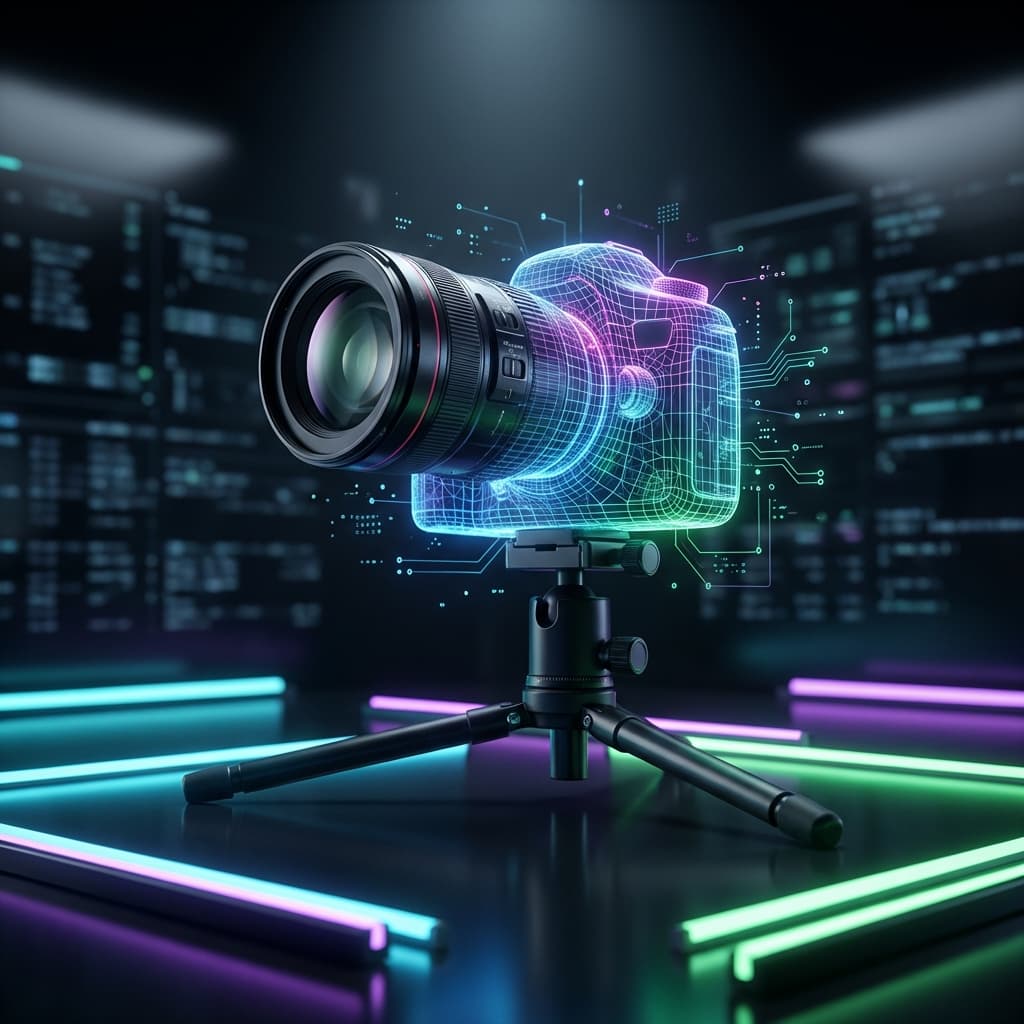

We've all been there: you upload a set of photos to an AI 3D generator like Rendery3D or Luma AI, wait eagerly for the result, and... it looks like melted wax. The edges are blurry, the textures are stretched, and there are holes in the mesh.
Is the AI broken? In most cases, the issue lies in the input photos. AI models are incredibly powerful, but they operate on a simple principle: Garbage In, Garbage Out.
To get crisp, accurate, and professional-grade 3D models - whether you're using NeRF, Gaussian Splatting, or traditional photogrammetry - you need to feed the system high-quality data. This guide covers the end-to-end process used by professionals to capture perfect input data for AI 3D asset creation.
1. Preparation: The Invisible Step
Before you even touch the camera, look at your subject. AI struggles with two main things: lack of features and moving reflections.
Reflective/Transparent Objects
The Problem: AI sees a reflection as "depth" continuing inside the object. Glass and chrome are notoriously difficult.
The Fix: Use scanning spray, dry shampoo, or even a light dusting of flour to create a matte surface. You need the shape, not the shine.
Featureless Surfaces
The Problem: A perfectly smooth white wall gives the AI no "landmarks" to track.
The Fix: Add temporary texture. Stick some painter's tape or draw small dots on featureless areas to help the software align the images.
2. Lighting: The "Flat" Standard
In traditional photography, shadows create mood. In AI 3D generation, shadows create errors. If you capture hard shadows, the AI interprets them as dark geometry.
💡The Goal: Albedo
You are trying to capture the object's "Albedo" - its true color without lighting info. This allows the 3D model to be re-lit in any virtual environment later.
✓Ideal Setup
- Outdoors: Overcast/cloudy day (nature's softbox).
- Indoors: Softboxes or lights bounced off a white ceiling.
- Result: Even illumination, soft shadows.
✗Avoid
- Direct Sun: Creates high contrast and hard shadows.
- On-Camera Flash: Flattens the front but creates harsh drop shadows.
- Mixing Lights: Don't mix warm tungsten with cool daylight.
3. Shooting Technique: Turntable vs. Walk-Around
There are two main ways to capture an object. Choose the one that fits your subject. Most modern photogrammetry software like Polycam, RealityCapture, or the open-source Meshroom can process either method.
Method A: The Turntable (Small Objects)
Best for shoes, toys, products. Place the object on a lazy susan.
- Camera stays ensuring a perfectly still background (or use a greenscreen).
- Rotate object 10-15 degrees per shot.
- CRITICAL: The lighting must be even so shadows don't "spin" with the object.
Method B: Walk-Around (Large Objects)
Best for statues, furniture, people. You move around the object.
- Maintenance of consistent distance is key.
- Background features help the AI calculate camera position.
- Follow the "Dome" pattern (see below).
4. Coverage Pattern: The Dome
One circle isn't enough. You need to capture the geometry from multiple elevations to avoid "stretching" on top surfaces.
The Base Ring (Eye Level)
Shoot 360° around the object at center height. Overlap each photo by 60-80%.
The High Ring (45° Angle)
Raise the camera and shoot looking down. This captures the top surfaces.
The Details (Close-ups)
Move in close for complex areas. The AI can integrate these high-res details if they overlap with the wider shots.
Photo Readiness Checklist
Complete this checklist before starting your photoshoot to ensure the best AI results.
Equipment
Environment
Technique
5. Technical Settings: The "Sharp" Standard
Blur is the enemy. Every pixel needs to be crisp. Whether using a DSLR or iPhone, these rules apply.
Aperture & DOF
Goal: Deep depth of field. Everything in focus.
Setting: f/8 to f/11 (DSLR) / Standard Lens (Phone)
Shutter Speed
Goal: Zero motion blur.
Setting: > 1/100s, or use a tripod.
ISO
Goal: Minimal noise. Noise looks like texture to AI.
Setting: 100 - 400
Exposure Lock
Goal: Consistent brightness.
Setting: AE/AF Lock (Phone) / Manual Mode (DSLR)
6. Watch: Photogrammetry in Action
Theory is one thing - seeing the process in action is another. This comprehensive tutorial from School of Motion demonstrates exactly how to capture real-world objects using just your smartphone, covering setup, lighting, and capture patterns:
Video: "Getting Started with Photogrammetry Using Your Cell Phone" by School of Motion - a practical guide to capturing objects for 3D reconstruction using smartphone photography.
Summary: The Perfect Dataset
AI 3D generation is a collaboration between you and the machine. Limit the variables. Remove the shadows. Lock the focus. If you provide a clean, consistent set of images, modern AI tools can produce results that rival weeks of manual modeling labor.
For more on how AI is transforming 3D workflows, check out our guide on manual modeling vs. AI generation costs, or learn how to use these models for AI product photography.
Ready to Scan?
You have the knowledge. Now you just need the tool. Rendery3D turns your photos into production-ready 3D assets in minutes.
Start Creating for Free